How NetApp Cybersecurity Solutions Protect Enterprise Data
In today’s digital economy, enterprise data has become one of the most valuable assets organizations possess. Businesses rely on data for operations, customer engagement, analytics, innovation, and decision-making. However, the rapid increase in cyber threats such as ransomware, phishing attacks, insider threats, and advanced persistent attacks has made protecting enterprise information more challenging than ever. Organizations across industries are now prioritizing cybersecurity investments to defend sensitive data and maintain operational continuity.
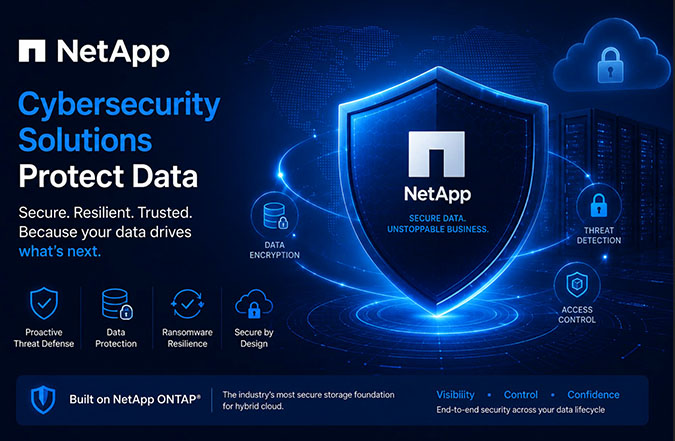
Among the leading technology companies helping enterprises strengthen their security posture is NetApp. Known for its advanced data storage and cloud management technologies, NetApp has developed a comprehensive cybersecurity ecosystem designed to protect enterprise environments from modern threats. Through intelligent storage architecture, ransomware protection, data backup solutions, cloud security integration, and zero-trust principles, NetApp helps organizations secure their critical information while maintaining business agility.
The Growing Importance of Enterprise Data Protection
Cyberattacks have evolved dramatically over the last decade. Traditional antivirus software and perimeter firewalls are no longer sufficient to protect modern enterprise infrastructure. Attackers increasingly target cloud environments, remote work systems, and hybrid infrastructures where sensitive data is distributed across multiple platforms.
Ransomware remains one of the most destructive cyber threats facing businesses today. Attackers encrypt company data and demand payment for recovery, often causing severe downtime and financial loss. In many cases, businesses suffer reputational damage and regulatory penalties after data breaches.
This evolving threat landscape has pushed enterprises to seek more intelligent and automated cybersecurity solutions. Organizations need systems capable of detecting threats early, isolating compromised data, enabling rapid recovery, and ensuring continuous availability. NetApp addresses these challenges through a layered cybersecurity strategy focused on proactive defense and resilient data management.
NetApp’s Security-First Data Architecture
One of the strongest aspects of NetApp cybersecurity solutions is its security-first architecture. Rather than treating security as an optional add-on, NetApp integrates protection directly into storage and data management systems.
NetApp’s infrastructure is designed around the principle that enterprise data must remain secure whether it resides on-premises, in hybrid environments, or in public cloud platforms. This integrated approach reduces vulnerabilities that can arise when businesses rely on disconnected security tools.
NetApp solutions provide:
- Built-in encryption
- Access control policies
- Automated threat detection
- Secure backup systems
- Data immutability
- Continuous monitoring
- Compliance support
By embedding security into the storage layer itself, NetApp reduces attack surfaces and strengthens organizational resilience against cyber threats.
Advanced Ransomware Protection
Ransomware attacks can cripple entire organizations within minutes. NetApp combats ransomware using intelligent detection mechanisms and immutable storage technologies.
One of NetApp’s most important capabilities is autonomous ransomware protection. Using machine learning and behavioral analytics, the system identifies unusual file activity that may indicate ransomware encryption attempts. When suspicious behavior is detected, administrators receive alerts before widespread damage occurs.
Additionally, NetApp Snapshot technology creates rapid point-in-time copies of enterprise data. These snapshots are immutable, meaning attackers cannot easily modify or encrypt them. If ransomware compromises primary systems, organizations can quickly restore clean data copies without paying attackers.
This recovery capability dramatically reduces downtime and minimizes business disruption. Instead of spending days or weeks rebuilding systems, companies can restore operations within hours or even minutes.
Immutable Backups and Data Recovery
Data backup plays a critical role in cybersecurity resilience. However, traditional backups are sometimes vulnerable to deletion or corruption during sophisticated cyberattacks.
NetApp addresses this challenge through immutable backup architecture. Immutable data cannot be altered, deleted, or encrypted during a predefined retention period. This ensures organizations always maintain a clean recovery point even if attackers gain administrative access.
NetApp’s secure backup systems also support:
- Automated backup scheduling
- Rapid disaster recovery
- Multi-cloud replication
- Secure archival storage
- Air-gapped backup environments
These capabilities help enterprises maintain business continuity during cyber incidents, hardware failures, or natural disasters.
Fast recovery is especially important for industries such as healthcare, finance, manufacturing, and government sectors where downtime can create severe operational and legal consequences.
Zero Trust Security Integration
Modern cybersecurity strategies increasingly rely on zero trust architecture. The zero trust model assumes that no user, device, or application should automatically receive trusted access to enterprise systems.
NetApp incorporates zero trust principles into its cybersecurity framework by enforcing strict identity verification and access control measures.
Key zero trust features include:
- Role-based access management
- Multi-factor authentication integration
- Least-privilege access policies
- Continuous activity monitoring
- User behavior analytics
These controls reduce the likelihood of insider threats and unauthorized access. Even if attackers compromise one account or device, lateral movement within the network becomes significantly more difficult.
NetApp also integrates with leading identity and security platforms, allowing enterprises to create unified security policies across their infrastructure.
Cloud Security for Hybrid Enterprises
As organizations migrate workloads to cloud platforms, cybersecurity challenges become more complex. Many enterprises now operate hybrid environments that combine on-premises systems with multiple cloud providers.
NetApp provides strong cloud security capabilities designed to protect data across diverse environments. Its solutions integrate with major cloud providers including Amazon Web Services, Microsoft Azure, and Google Cloud.
NetApp cloud security features include:
- Secure cloud storage
- Data encryption in transit and at rest
- Cloud workload monitoring
- Centralized policy management
- Threat detection across hybrid environments
- Secure cloud backup and recovery
This unified visibility allows security teams to manage and protect enterprise data from a single operational framework rather than juggling multiple disconnected security tools.
Artificial Intelligence and Threat Detection
Artificial intelligence has become an essential component of modern cybersecurity. Traditional security systems often struggle to identify sophisticated attacks quickly enough to prevent damage.
NetApp uses AI-driven analytics to improve threat detection and automate security responses. Machine learning models analyze data access patterns, network activity, and storage behavior to identify anomalies that may indicate cyber threats.
These intelligent systems help organizations:
- Detect ransomware earlier
- Identify suspicious insider activity
- Reduce false positive alerts
- Improve incident response times
- Automate threat remediation
AI-powered monitoring also reduces the burden on IT security teams by prioritizing critical alerts and simplifying investigation workflows.
As cyberattacks become increasingly automated, AI-driven cybersecurity solutions like those offered by NetApp will continue to grow in importance.
Compliance and Regulatory Support
Many industries face strict regulatory requirements related to data privacy and cybersecurity. Organizations must demonstrate compliance with frameworks such as GDPR, HIPAA, PCI DSS, and other regional regulations.
NetApp helps enterprises meet compliance requirements through secure data governance and audit capabilities.
Compliance-related features include:
- Data classification tools
- Encryption management
- Audit logging
- Retention policy enforcement
- Secure archival storage
- Access tracking and reporting
These capabilities simplify regulatory audits and help organizations avoid penalties associated with non-compliance or data breaches.
For multinational enterprises operating across multiple jurisdictions, centralized compliance management is especially valuable.
Business Continuity and Operational Resilience
Cybersecurity is no longer only about preventing attacks. Organizations must also ensure operational resilience when incidents occur.
NetApp emphasizes cyber resilience through high-availability architecture, rapid failover systems, and intelligent recovery automation.
Its solutions enable businesses to:
- Maintain application uptime
- Minimize service disruptions
- Restore operations rapidly
- Protect customer trust
- Reduce financial losses
Operational resilience has become a critical competitive advantage in industries where customers expect uninterrupted digital services.
By combining storage reliability with advanced cybersecurity protections, NetApp helps enterprises strengthen both security and business continuity simultaneously.
The Future of Enterprise Cybersecurity
The cybersecurity landscape will continue evolving as organizations adopt emerging technologies such as artificial intelligence, edge computing, Internet of Things devices, and distributed cloud infrastructure.
Future threats will likely become more sophisticated, automated, and difficult to detect using conventional methods. Enterprises will need cybersecurity platforms capable of adapting rapidly to changing attack patterns.
NetApp is positioning itself as a leader in this evolving environment by continuously investing in intelligent automation, cloud-native security, AI-driven analytics, and cyber resilience technologies.
Its integrated approach allows organizations to secure data across increasingly complex environments without sacrificing performance or scalability.
Conclusion
Enterprise data protection has become one of the most important priorities in the digital era. Cyber threats continue to evolve, placing enormous pressure on organizations to secure sensitive information while maintaining operational efficiency.
NetApp addresses these challenges through a comprehensive cybersecurity strategy built around intelligent storage, ransomware protection, immutable backups, zero trust security, AI-driven threat detection, and hybrid cloud security integration.
By embedding security directly into data infrastructure, NetApp enables organizations to reduce cyber risks, improve resilience, accelerate recovery, and maintain regulatory compliance. As cyberattacks become more advanced, enterprises will increasingly rely on integrated cybersecurity platforms like NetApp to safeguard their most valuable digital assets.
For businesses seeking a modern approach to enterprise data protection, NetApp cybersecurity solutions offer a powerful combination of security, reliability, scalability, and operational resilience.