Dedicated Cloud Hosting
In the modern digital economy, where uptime, performance, and data security are critical to business success, Dedicated Cloud Hosting has emerged as a powerful infrastructure solution. It bridges the gap between traditional dedicated servers and flexible cloud environments, offering organizations the best of both worlds: exclusive resources combined with cloud scalability. As applications grow more complex and customer expectations rise, understanding dedicated cloud hosting is essential for businesses aiming to build reliable, high-performance digital platforms.
What Is Dedicated Cloud Hosting?
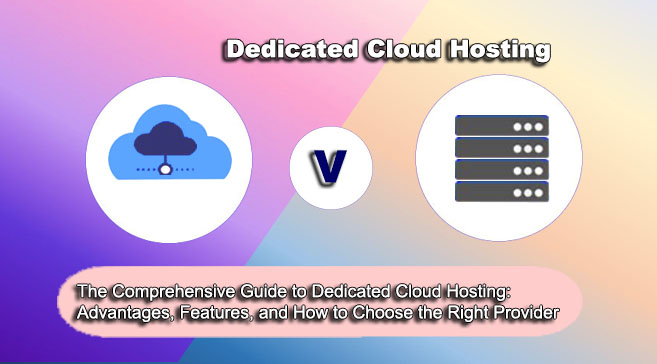
Dedicated cloud hosting is a cloud computing model in which a single organization is allocated dedicated physical resources—such as servers, storage, and networking—within a cloud environment. Unlike public cloud hosting, where resources are shared among multiple tenants, dedicated cloud hosting ensures that the underlying hardware is reserved exclusively for one customer.
This model is often described as single-tenant cloud infrastructure, even though it retains many characteristics of cloud computing, including virtualization, on-demand provisioning, centralized management, and automation. In simple terms, it provides the isolation and control of a dedicated server with the flexibility and convenience of the cloud.
How Dedicated Cloud Hosting Works
Dedicated cloud hosting relies on virtualization technology layered on top of physical servers that are not shared with other clients. These servers are typically located in enterprise-grade data centers managed by the cloud provider. The provider handles hardware maintenance, networking, power, cooling, and physical security, while customers manage operating systems, applications, and configurations.
Key components include:
-
Dedicated physical servers assigned to a single tenant
-
Virtual machines (VMs) or containers running on those servers
-
Private networking isolated from other cloud customers
-
Cloud management tools for provisioning, scaling, and monitoring
This structure allows organizations to deploy workloads quickly while maintaining strict control over performance and security.
Dedicated Cloud vs Public Cloud
While public cloud platforms are popular due to their low entry cost and scalability, they are not always suitable for every workload. Dedicated cloud hosting differs in several important ways:
-
Resource Isolation
In a public cloud, CPU, memory, and storage are shared among multiple customers. Dedicated cloud hosting eliminates resource contention, ensuring predictable performance. -
Performance Consistency
Because hardware is not shared, applications experience stable and consistent performance, which is critical for high-traffic websites, databases, and enterprise systems. -
Security and Compliance
Dedicated infrastructure simplifies compliance with regulations such as GDPR, HIPAA, and PCI-DSS by reducing exposure to other tenants. -
Customization
Organizations can customize hardware specifications, network architecture, and security policies more deeply than in a public cloud.
However, dedicated cloud hosting is typically more expensive than public cloud solutions, making it better suited for businesses with specific performance, security, or compliance requirements.
Dedicated Cloud vs Traditional Dedicated Servers
Traditional dedicated servers provide exclusive access to hardware but lack cloud-like features. Dedicated cloud hosting improves on this model in several ways:
-
Faster provisioning: Resources can be deployed in minutes instead of days.
-
Scalability: Infrastructure can scale vertically or horizontally with minimal downtime.
-
Automation: APIs and management dashboards simplify operations.
-
High availability: Built-in redundancy and failover options improve reliability.
In essence, dedicated cloud hosting modernizes the dedicated server concept by integrating it into a flexible cloud ecosystem.
Key Benefits of Dedicated Cloud Hosting
1. High Performance
Dedicated cloud hosting is ideal for performance-sensitive workloads. Applications such as real-time analytics, high-frequency trading platforms, large e-commerce websites, and media streaming services benefit from guaranteed CPU, memory, and I/O performance.
2. Enhanced Security
Since infrastructure is not shared, the risk of data leakage or cross-tenant attacks is significantly reduced. Organizations can implement custom firewalls, intrusion detection systems, and encryption strategies tailored to their needs.
3. Regulatory Compliance
Industries such as finance, healthcare, and government often face strict regulatory requirements. Dedicated cloud hosting makes it easier to meet compliance standards by providing controlled environments and audit-ready infrastructure.
4. Customization and Control
Businesses can choose specific hardware configurations, operating systems, virtualization platforms, and network designs. This level of control is particularly valuable for legacy applications or specialized workloads.
5. Scalability Without Compromise
While dedicated servers traditionally lacked scalability, dedicated cloud hosting allows organizations to add resources on demand. This means businesses can grow without sacrificing performance or security.
Common Use Cases
Dedicated cloud hosting is widely adopted across various industries and applications:
-
Enterprise Applications: ERP, CRM, and internal business systems
-
E-commerce Platforms: High-traffic online stores requiring low latency
-
Financial Services: Trading systems, payment processing, and risk analytics
-
Healthcare Systems: Electronic health records and medical imaging platforms
-
SaaS Providers: Multi-customer applications with strict performance SLAs
-
Big Data and AI: Data processing, machine learning training, and analytics
These use cases demand a balance of reliability, security, and flexibility that dedicated cloud hosting provides.
Cost Considerations
Dedicated cloud hosting is generally more expensive than shared cloud solutions, but the pricing model is often more predictable. Costs typically include:
-
Dedicated hardware rental
-
Cloud management and orchestration
-
Network bandwidth and storage
-
Optional managed services and support
For organizations that experience unpredictable public cloud costs due to variable usage, dedicated cloud hosting can actually result in better long-term cost efficiency.
Dedicated Cloud in Hybrid and Multi-Cloud Strategies
Many organizations adopt hybrid cloud or multi-cloud architectures, combining dedicated cloud hosting with public cloud services. For example:
-
Sensitive data and mission-critical workloads run on a dedicated cloud
-
Development, testing, and burst workloads run on a public cloud
-
Disaster recovery environments are distributed across multiple providers
This approach allows businesses to optimize cost, performance, and risk while maintaining flexibility.
Managed vs Unmanaged Dedicated Cloud Hosting
Dedicated cloud hosting can be offered as managed or unmanaged:
-
Managed dedicated cloud: The provider handles system updates, security patches, monitoring, and backups. This is ideal for organizations without large IT teams.
-
Unmanaged dedicated cloud: The customer has full responsibility for system administration. This option offers maximum control but requires technical expertise.
Choosing between these options depends on internal resources, budget, and operational priorities.
Challenges and Limitations
Despite its advantages, dedicated cloud hosting is not without challenges:
-
Higher cost compared to public cloud
-
More complex setup than shared hosting
-
Potential overprovisioning if resources are not carefully planned
To address these challenges, businesses should conduct thorough capacity planning and work closely with experienced cloud providers.
Future of Dedicated Cloud Hosting
As cloud technology continues to evolve, dedicated cloud hosting is becoming more accessible and sophisticated. Trends shaping its future include:
-
Automation and AI-driven resource management
-
Integration with container platforms like Kubernetes
-
Edge computing combined with dedicated cloud infrastructure
-
Stronger security frameworks and zero-trust architectures
With growing concerns around data privacy, performance predictability, and regulatory compliance, demand for dedicated cloud hosting is expected to rise.
Conclusion
Dedicated cloud hosting represents a strategic infrastructure choice for organizations that require high performance, strong security, and full control without sacrificing the agility of the cloud. By combining dedicated hardware with cloud-native features, it offers a compelling solution for modern enterprises and fast-growing digital businesses.
While it may not be the right fit for every workload, dedicated cloud hosting excels where reliability, compliance, and performance are non-negotiable. As businesses continue to navigate an increasingly complex digital landscape, dedicated cloud hosting stands out as a robust and future-ready foundation for mission-critical applications.